Hot Plate Leveller Roll Bearings: Proven Lessons from Multiple Overhauls — Failure Analysis and Selection Guide
By RAYSDE Bearings — supplier & OEM partner for steel mill and heavy industry bearings.
1. Application Overview: What a Hot Leveller Does to Its Bearings
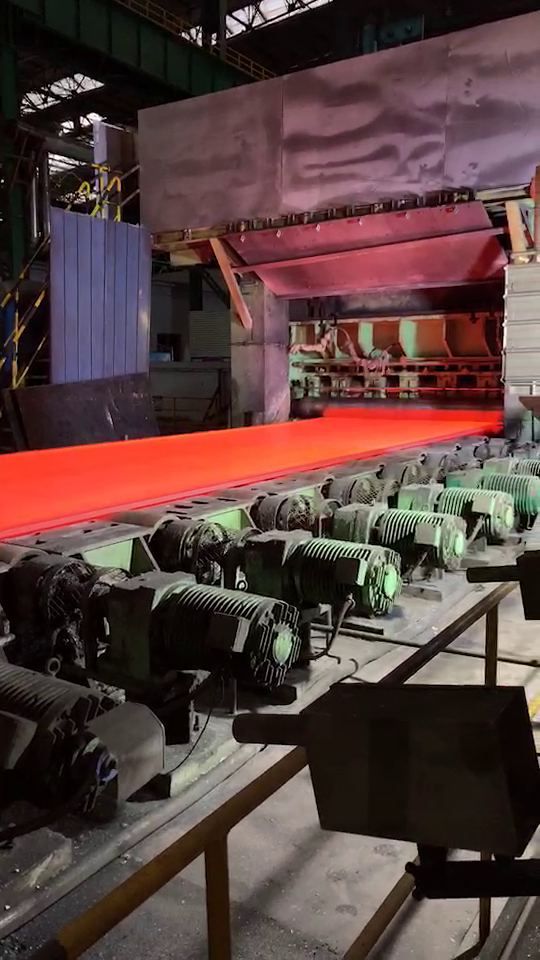
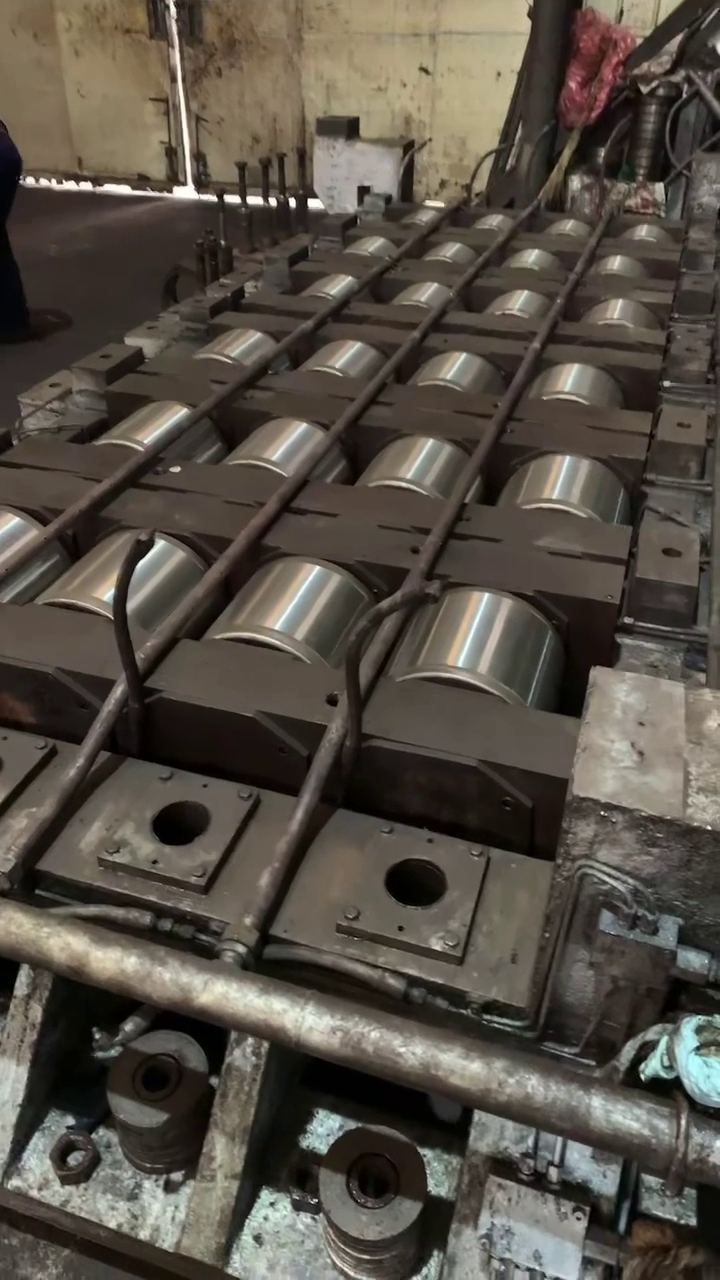
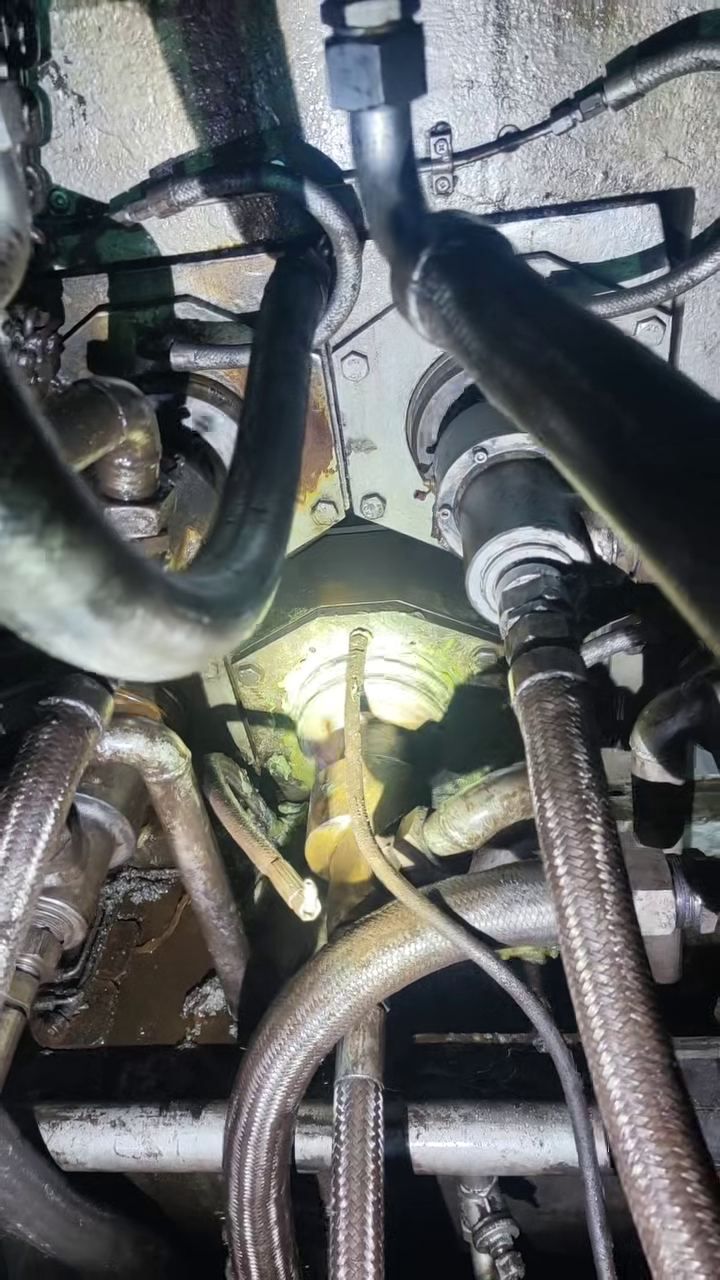
In a medium/heavy plate mill, the hot leveller (straightener) flattens plates coming off the rolling line at temperatures of roughly 500–900 °C. Each roll is driven, loaded, and heated from its surface. A typical machine carries two staggered rows of rolls, each roll supported at both roll necks by large spherical roller bearings, lubricated by an oil-air system feeding through brass distributor blocks.
Three factors dominate bearing life here:
- Heat conduction along the roll neck raises bearing temperature and thins the lubricant film.
- Roll deflection under load misaligns the roll neck — the bearing must self-align or it will edge-load.
- Contamination: scale dust and descaling water find every path into the housing.
2. The Case: Overhaul Experience Summed Up from Multiple Plate-Mill Jobs
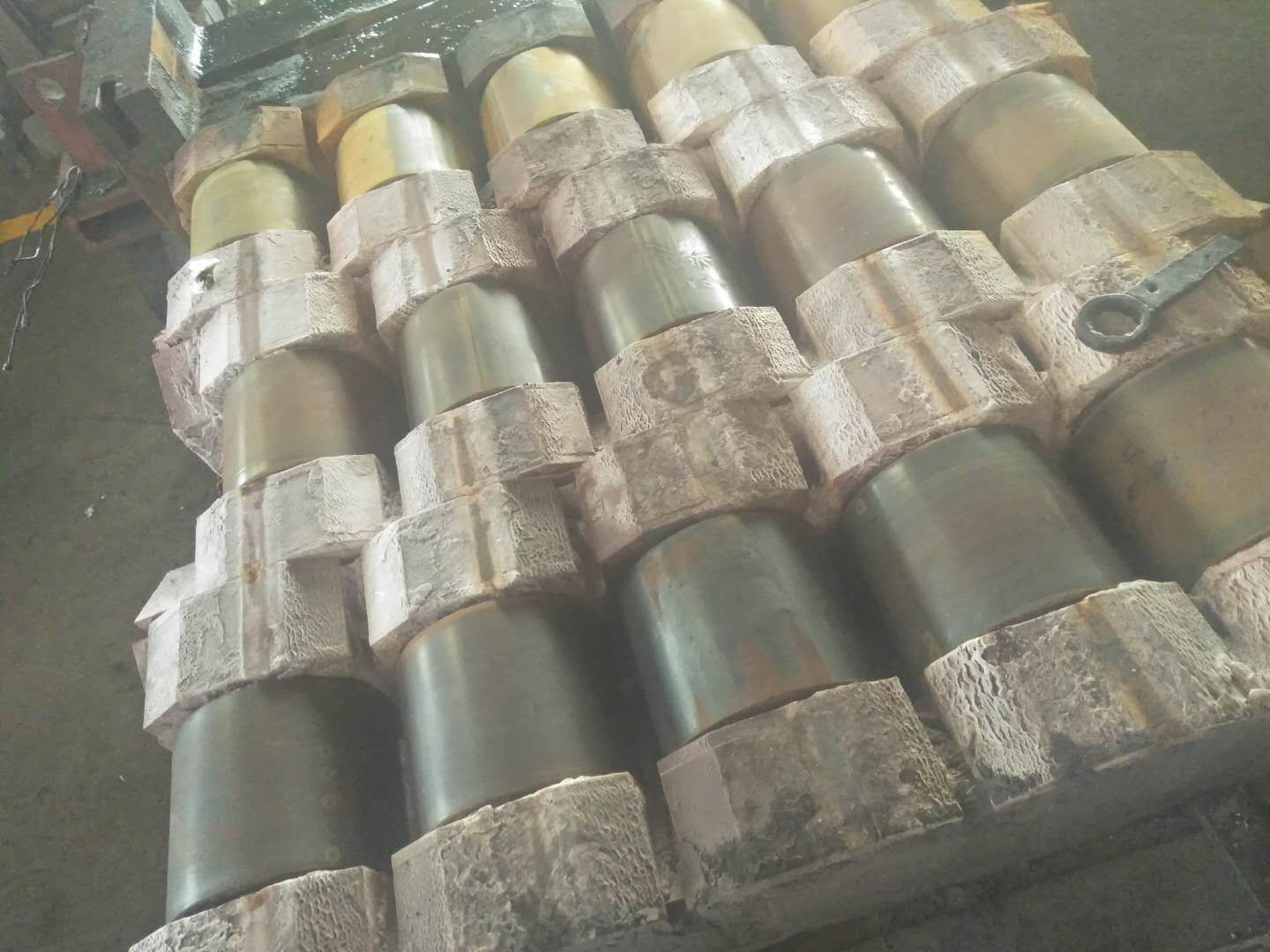
This article distills lessons from several complete leveller overhauls we supplied bearings for at medium/heavy plate mills — not a single job. Each overhaul followed the same scope: remove all rolls, inspect every roll-neck bearing, rebuild worn roll surfaces by overlay welding, re-machine them, fit new bearings, and restore the oil-air lubrication system with new volumetric distributors.
Condition found at disassembly told the same story again and again — and it is the same story in most hot levellers we see.
3. Failure Analysis: What the Removed Bearings Showed
3.1 Carbonized grease and seizure (working-roll position)
The bearing on the failed position came off the roll neck with its outer ring pushed loose and the grease converted to hard black carbon. Once grease carbonizes at sustained roll-neck temperature, metal-to-metal contact follows within hours; the resulting heat expands the inner ring, clearance goes negative, and the bearing seizes and walks on the shaft.
3.2 Raceway smearing and roller wear
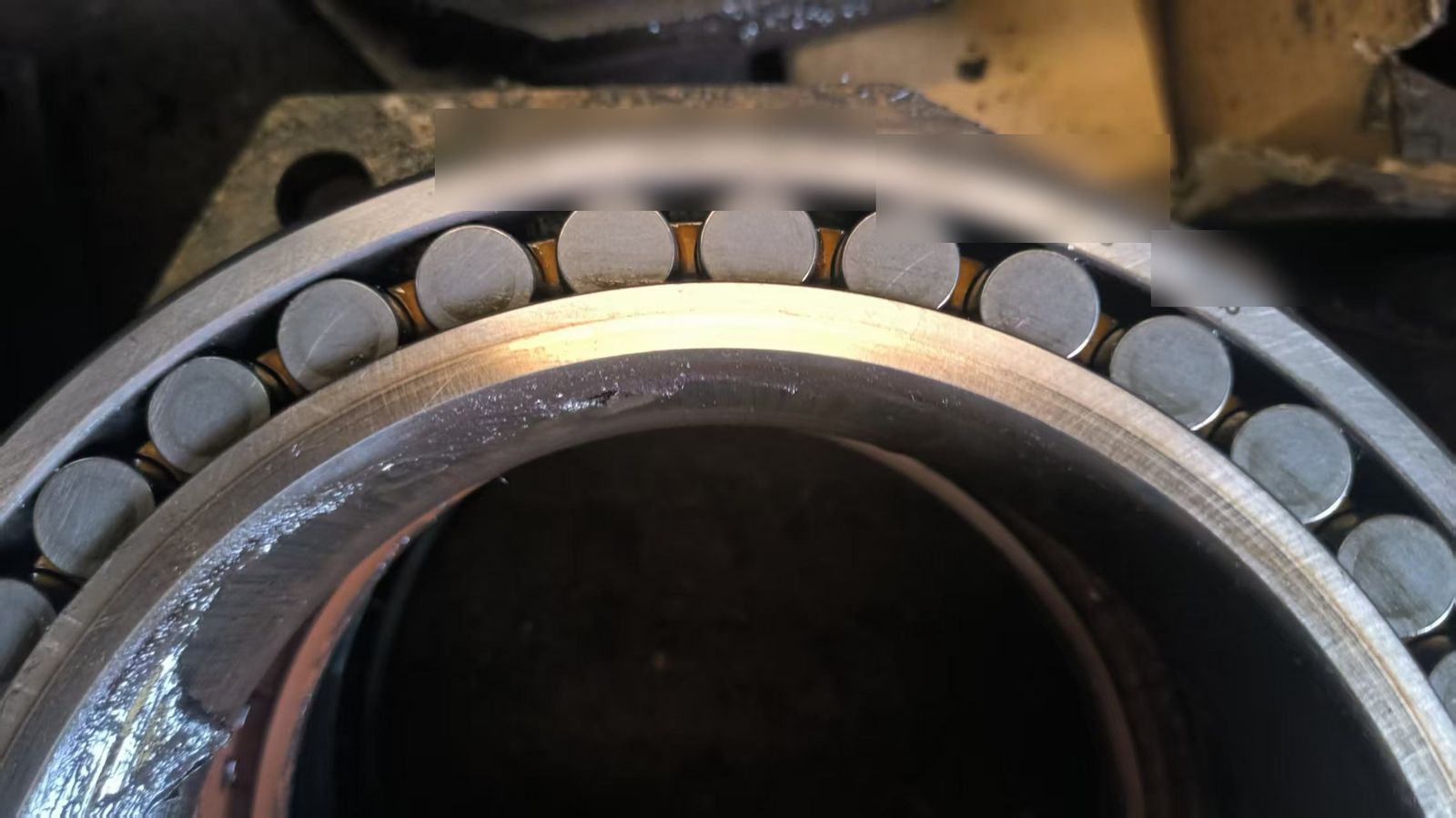
On the second bearing, rollers showed surface discoloration and the inner ring raceway showed circumferential smearing. This is typical when the oil film is too thin for the load: surface asperities micro-weld and tear, generating heat and accelerating spalling.
3.3 Why clearance class matters more than brand
Both failure modes trace back to the same root: thermal environment plus wrong internal clearance. A spherical roller bearing specified with normal clearance in a hot leveller loses its running clearance after thermal expansion and interference-fit reduction. The fix is not a "better" bearing — it is the correct C3 (or C4) clearance, a high-temperature-capable lubrication system, and a cage design that survives shock loads.
4. Bearing Selection for Leveller Roll Necks
Both positions of this leveller use double-row spherical roller bearings, chosen so that roll deflection is absorbed by internal self-alignment instead of edge loading. The designations found stamped on the original equipment rings in this case were 24130 (150 × 250 × 100 mm) on the support side and 23936 (180 × 250 × 52 mm) on the working-roll side — both with C3 clearance and W33 outer-ring lubrication groove and holes.
| Designation | d × D × B (mm) | Typical position | Common suffix options (design / cage + clearance) |
|---|---|---|---|
| 24130CA/W33 | 150 × 250 × 100 | Support roll | CA / BE / MB / CC / EJ, C3 / C4 |
| 24132CA/W33 | 160 × 270 × 109 | Support roll (larger mill) | CA / BE / MB / CC / EJ, C3 / C4 |
| 24134CA/W33 | 170 × 280 × 109 | Support roll (large mill) | CA / BE / MB / CC / EJ, C3 / C4 |
| 23936-S-MB-C3 | 180 × 250 × 52 | Working roll | CA / BE / MB / CC / EJ, C3 / C4 |
These spherical roller series share the same internal-design / cage options (CA, BE, MB, CC, EJ) and clearance classes (C3, C4). The designation in column 1 already encodes the specific variant fitted on this leveller — when reordering, match the marking stamped on your outer ring, then choose the cage and clearance that fit your duty and temperature.
4.1 Decoding the suffixes that matter here
- C3 — radial internal clearance larger than normal; mandatory where roll heat reaches the bearing.
- MB — machined brass cage; the heavy-duty choice for shock and vibration (see photo below).
- CC / CA / BE / EJ — internal design and cage variants of the spherical roller family; CA and BE use machined cages, CC and EJ use pressed-steel cages. Pick the cage that matches your duty (machined brass MB for shock/heat, pressed steel CC/EJ for standard duty).
- W33 — groove and three lubrication holes in the outer ring, feeding oil or grease directly to the rollers: the interface for the oil-air system.
- K / K30 — tapered bore (1:12 / 1:30) for sleeve mounting on a plain shaft.
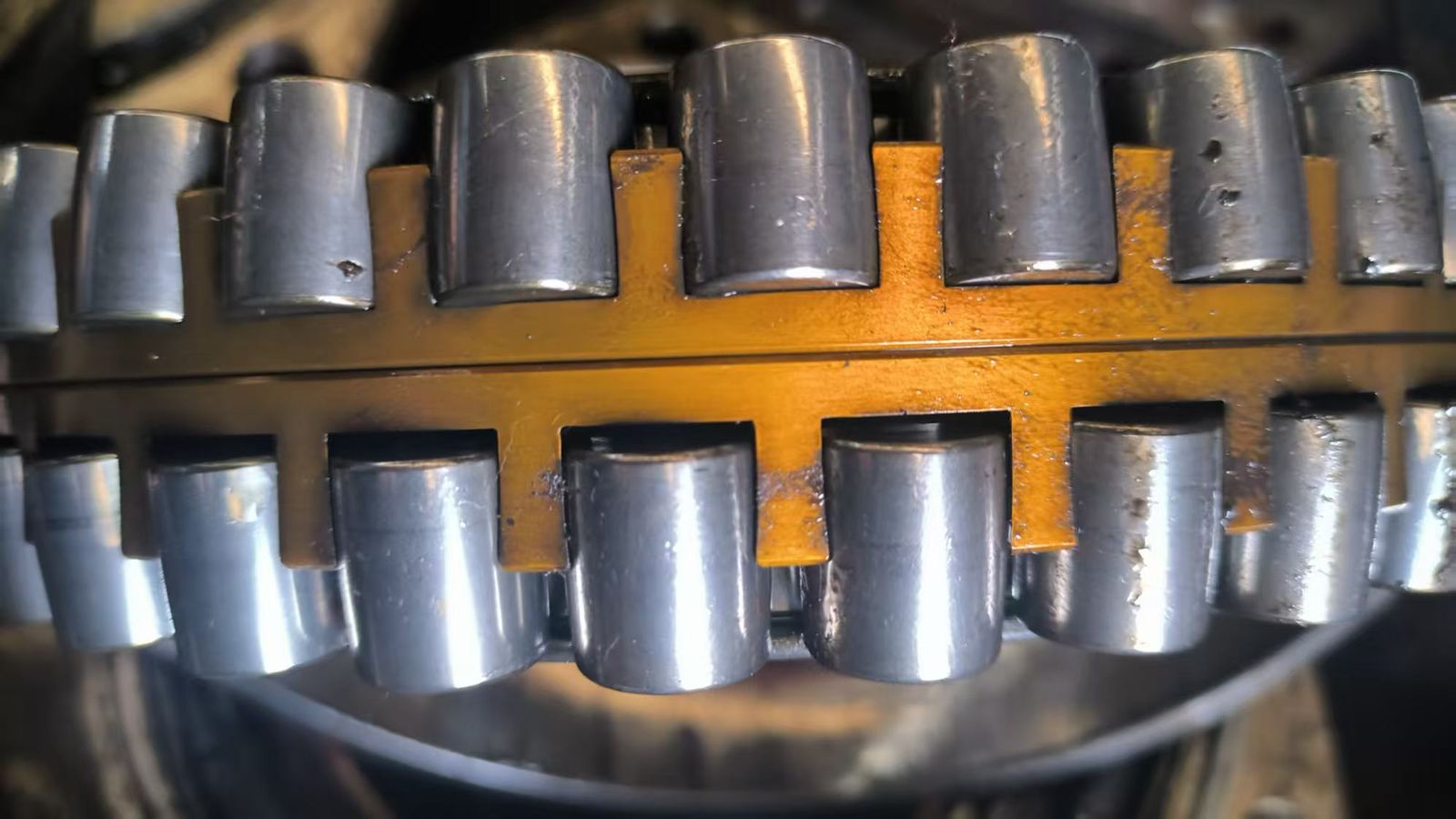
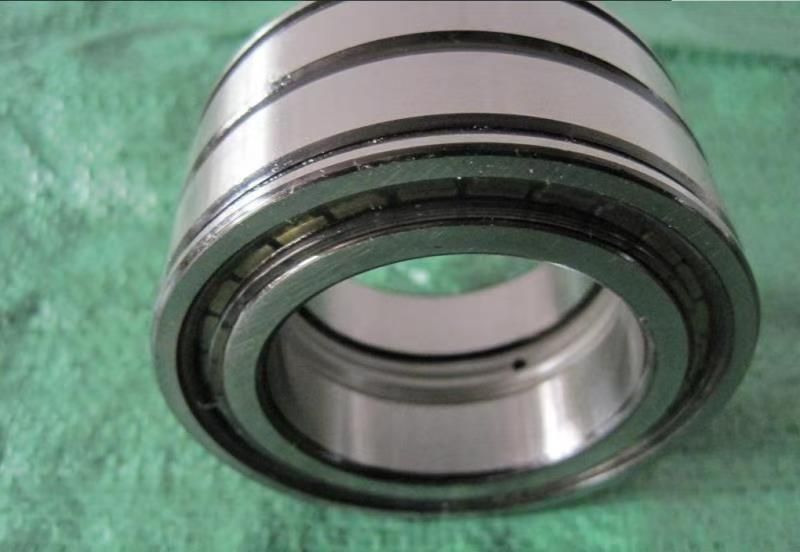
Where radial capacity matters more than alignment — for example support positions with very high radial load — full-complement double-row cylindrical roller bearings (NNF / SL design) are the alternative, carrying roughly 30% more rollers than a caged design at the same section size.
5. Oil-Air Lubrication and Distributor Selection
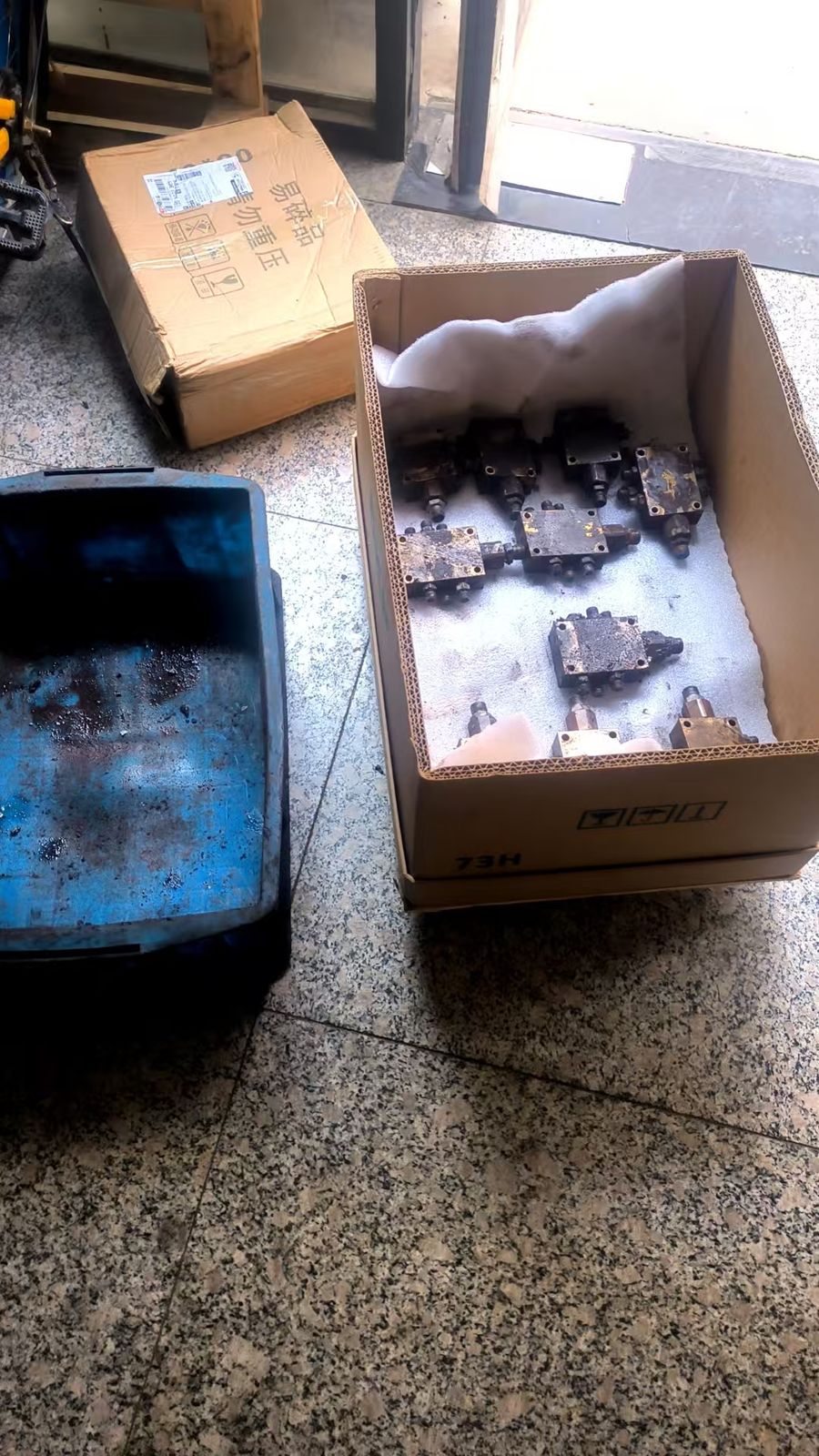
An oil-air system transports a thin, continuous film of oil inside an air stream to each roll neck — far better than grease at sustained high temperature, and it produces an positive airflow that keeps scale out of the housing. The heart of the circuit is the volumetric distributor block:
- Count the lubrication points per line and the required oil volume per point per cycle.
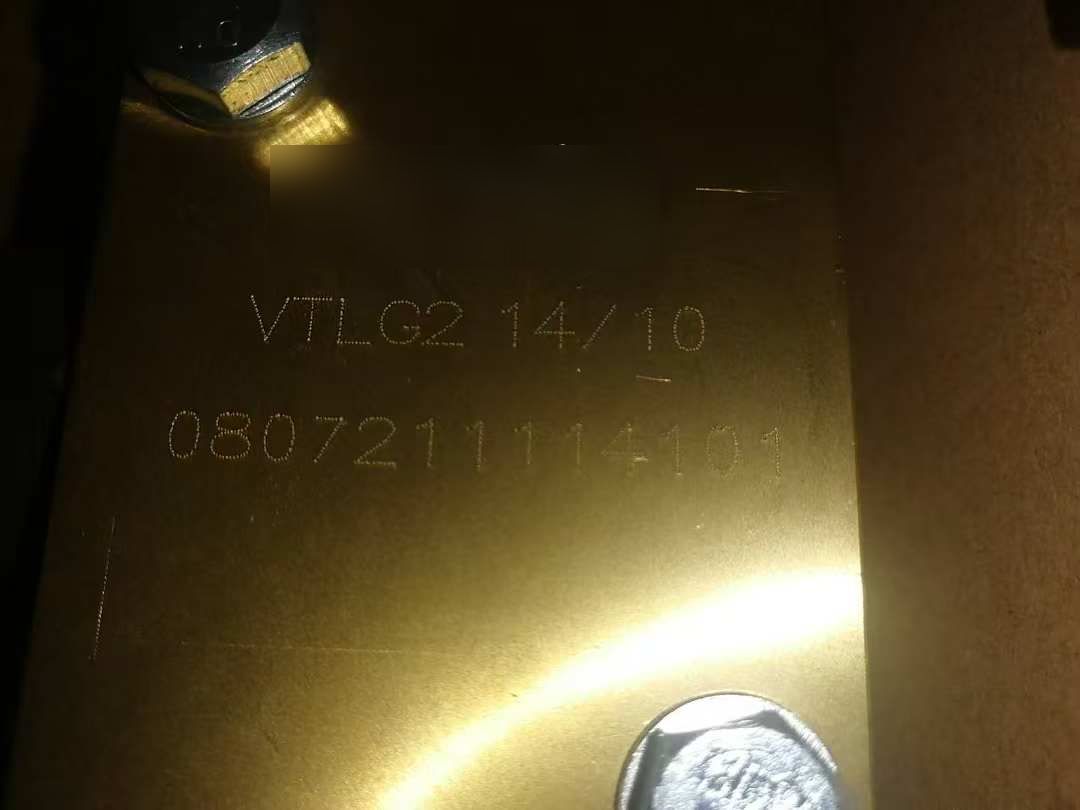
- Select each brass block by its per-outlet volume rating (e.g. 14/10 or 18/10 class) so every outlet meters exactly one point.
- One outlet = one bearing position. Never tee two roll necks off a single outlet.
- Mount blocks as close to the points as possible; verify outlet marking and serial traceability on the block face.
6. Roll Surface Remanufacturing: Overlay Welding and Re-turning
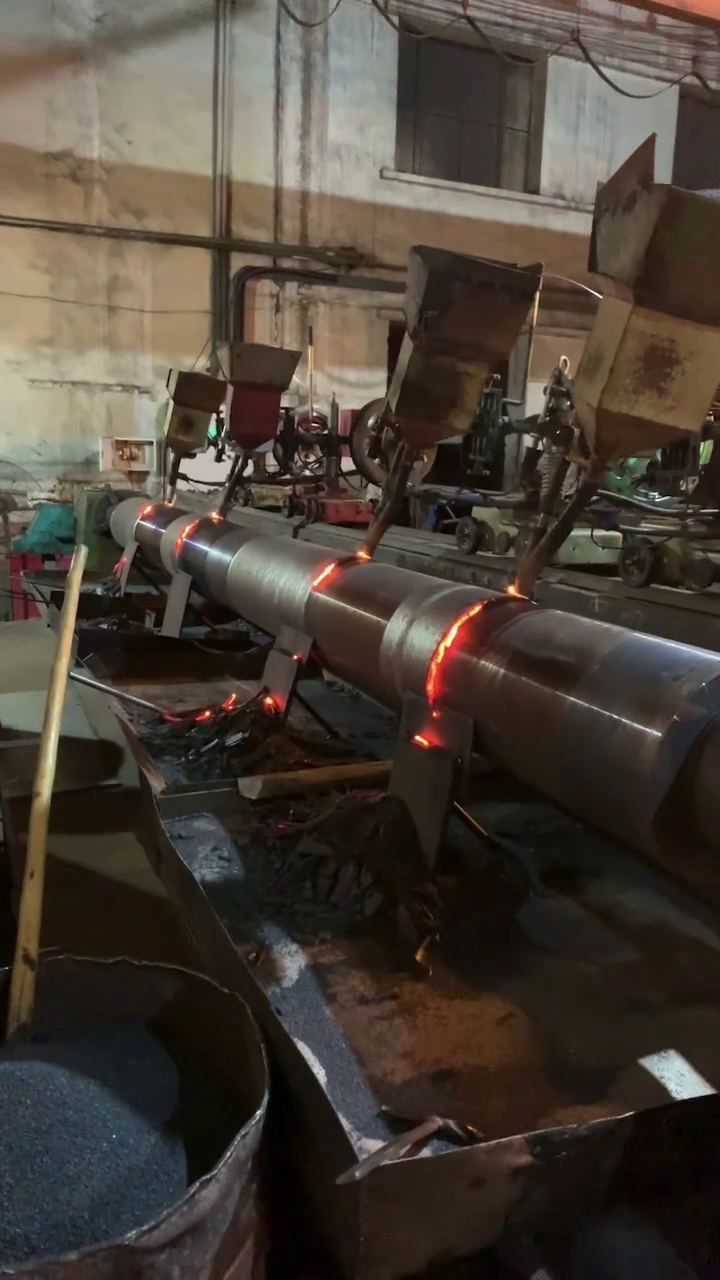
Replacing a large leveller roll is expensive and slow. The economic route — used on every one of these jobs — is:
- Mark and map defects on the worn roll body (chalking position marks at each pit or worn patch).
- Overlay welding of the worn surface with hardfacing wire, controlling interpass temperature.
- Stress relief, then finish turning back to nominal diameter and roughness on a heavy lathe.
- New bearings fitted during the same overhaul — never re-use a heat-damaged bearing on a freshly rebuilt roll.
7. Maintenance Checklist for Hot Leveller Bearings
- Verify clearance class (C3/C4) on every replacement — not just the size.
- Confirm cage type matches the duty: machined brass for shock and heat.
- Check W33 groove alignment with housing feed holes at every assembly.
- Inspect oil-air distributors yearly: metering drift is invisible until a bearing fails.
- Log roll-neck temperature per position; a rising trend is the earliest seizure warning.
- Sample removed grease: black, crumbly grease = the system ran dry long before the bearing failed.
8. Frequently Asked Questions
Why do bearings on hot plate leveller rolls fail early?
The dominant causes are lubrication breakdown (grease carbonization at 150–250 °C roll-neck temperature), insufficient internal clearance for thermal expansion, contamination by scale and cooling water, and misalignment loads. In the overhauls we have documented, seized bearings consistently showed fully carbonized grease and displaced outer rings — a classic lubrication-plus-clearance failure, not a material defect.
Which bearing types are used on hot plate leveller rolls?
Both roll-neck positions normally use double-row spherical roller bearings so the bearing can absorb roll deflection: a wider series such as 24130 (150×250×100 mm) for the heavily loaded support side, and a narrower series such as 23936 (180×250×52 mm) on the working-roll side. Full-complement cylindrical roller bearings (NNF design) are also used where radial capacity matters more than alignment.
What does C3 internal clearance mean, and why is it mandatory in this application?
C3 is a radial internal clearance greater than normal. Heat conducted from the hot plate through the roll expands the inner ring, and an interference fit on the roll neck reduces clearance further. Specifying normal clearance in a hot leveller frequently leads to preloading, overheating and seizure. C3 — or C4 in extreme temperature zones — compensates for this.
Why choose a machined brass (MB) cage instead of a pressed steel cage?
Machined brass cages are stronger, resist vibration and shock loads, tolerate marginal lubrication better, and do not deform at elevated temperature. For reversing shock loads typical of leveller passes, pressed steel cages can wear quickly at the rivets and pockets; MB brass cages are the standard heavy-duty choice for mill applications.
How do I size oil-air lubrication distributors for roll-neck lubrication points?
First count the lubrication points and group them by required oil volume per cycle. Brass volumetric distributor blocks are then selected per outlet volume (for example 14/10, 18/10 type ratings) so each roll neck receives its metered dose from a single oil-air line. The distributor must be mounted close to the point, and each outlet feeds exactly one bearing position — never split one outlet to two points.
Can worn leveller roll surfaces be repaired instead of replaced?
Yes. The standard rebuild route is overlay (hardfacing) welding of the worn roll body, stress-relief treatment, then finish turning back to nominal diameter and surface finish. This restores the roll at a fraction of replacement cost. Bearings should always be inspected and replaced during the same overhaul — reusing a carbonized or brinelled bearing on a freshly rebuilt roll destroys the repair.
Can you supply equivalents to the original European-brand bearings fitted on our mill?
Yes. RAYSDE supplies dimensionally and technically equivalent spherical roller and full-complement cylindrical roller bearings to ISO specification, matched to your original designation including clearance class, cage material and W33 lubrication groove. Send us the designation stamped on the outer ring and we will quote an equivalent.
What information do you need to quote leveller bearings for a plate mill?
Ideally: the bearing designation and suffix from the outer ring, or alternatively the shaft/housing dimensions plus load, speed and operating temperature. Photos of the removed bearing (raceways, rollers, cage) let our engineers confirm the failure mode and recommend the right clearance and cage variant. Send it to [email protected].
RAYSDE Bearings supplies spherical roller and full-complement cylindrical roller bearings to plate mills, service centers and maintenance contractors worldwide — as supplier & OEM partner, with three-language technical support (EN / CN / ZH-TW).
Email: [email protected] | Web: raysde.com
Images in this article come from documented plate-mill overhauls; the selection table sums up designations actually seen across multiple machines. Dimensions shown are standard ISO metric series sizes. Designations and photos are published for maintenance education; original-equipment markings in photos are anonymized.