2319M Self-aligning Ball Bearing
Selection Guide
Self-aligning ball bearings have two rows of balls running on a common sphered outer ring raceway, automatically compensating angular misalignment between shaft and housing (typically around 2°–3°) and greatly relaxing installation accuracy requirements. Radial capacity is lower than a spherical roller bearing of the same size, so they suit light to moderate loads; they accept limited axial load in both directions. Note their relatively high limiting speed and quiet running, which suits noise-sensitive applications. Tapered bore versions are mounted with an adapter sleeve.
Frequently Asked Questions / FAQ
Is RAYSDE 2319M available, and what is the MOQ?
2319M is supplied by RAYSDE through ISO 9001:2015 certified partner factories, with both stock and build-to-order options. Standard-part MOQ is tiered by bore: ≤50mm:500 pcs / 51–100mm:100 pcs / 101–300mm:20 pcs / >300mm:4 pcs; non-standard items are quoted per drawing. Send an inquiry for formal pricing and lead time.
What are the technical specifications of RAYSDE 2319M?
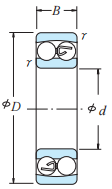
Key parameters of the 2319M Self-aligning Ball Bearing: bore d=95.0mm, outer D=200.0mm, width B=67.0mm, dynamic load Cr=165.0kN. For the full dimension table, load and speed data, and CAD drawings, please contact RAYSDE.
Which industries and equipment use the 2319M Self-aligning Ball Bearing?
Used in textile machinery, agricultural machinery, conveyors, fans and light-duty drives — particularly where shafts are long, housing bore concentricity is hard to guarantee, or the shaft tends to deflect at low to moderate speed.
What are the advantages of RAYSDE 2319M versus imported brands?
As a supplier partnered with ISO 9001:2015 certified factories, RAYSDE offers 2319M at competitive ex-works pricing with shorter lead times than comparable imported brands, plus non-standard customization and OEM support. Partner factories certified to ISO 9001:2015, with 3.1 material certificates available.
Can you provide engineering drawings and material certificates for 2319M?
Yes—CAD/DXF/PDF high-precision drawings and 3.1 material certificates (GCr15 bearing steel) for 2319M are available on request from RAYSDE.
2319M Should I choose a self-aligning ball bearing or a spherical roller bearing?
Both self-align, but the ball version uses point contact and suits light to moderate loads, higher speeds and noise-sensitive machinery such as textile machines, fans and farm equipment. The spherical roller version uses line contact with far higher radial capacity and suits heavy, shock and vibrating duty such as crushers, rolling mills and vibrating screens. If your load is mainly light-to-moderate radial and speed is fairly high, the ball type is the economical choice; for heavy or shock loads step up to the roller type.
2319M What should I watch for when installing a self-aligning ball bearing?
Although tolerant of misalignment, never strike the bearing directly or load the balls. Tapered-bore bearings mount on an adapter sleeve: drive the sleeve in with a nut or hydraulic method until it is seated, then lock it with a tab washer or locknut — judge the drive-up from the reduction in radial clearance and never overtighten. After mounting, rotate by hand to confirm smooth running, and check that external stops do not block the self-aligning movement.