51107/P6 Thrust Ball Bearing
Selection Guide
Thrust bearings carry axial load only and cannot carry radial load, so they must be combined with a radial bearing that provides radial location. Key selection points: thrust ball (point contact, suited to moderate speed and light-to-moderate pure axial load) versus thrust roller (line contact, much higher axial capacity and shock resistance); single versus double direction; and types with a sphered seating ring that compensate misalignment. At high speed, the limiting speed of thrust ball bearings drops markedly due to rolling element centrifugal effects.
Frequently Asked Questions / FAQ
Is RAYSDE 51107/P6 available, and what is the MOQ?
51107/P6 is supplied by RAYSDE through ISO 9001:2015 certified partner factories, with both stock and build-to-order options. Standard-part MOQ is tiered by bore: ≤50mm:500 pcs / 51–100mm:100 pcs / 101–300mm:20 pcs / >300mm:4 pcs; non-standard items are quoted per drawing. Send an inquiry for formal pricing and lead time.
What are the technical specifications of RAYSDE 51107/P6?
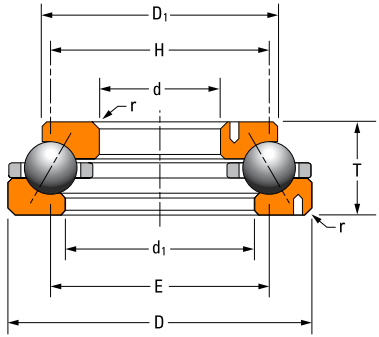
Key parameters of the 51107/P6 Thrust Ball Bearing: bore d=35mm, outer D=52mm, width B=12mm. For the full dimension table, load and speed data, and CAD drawings, please contact RAYSDE.
Which industries and equipment use the 51107/P6 Thrust Ball Bearing?
For pure axial load duties: vertical pumps and vertical motors, crane hooks and slew rings, machine tool feed screw supports, rolling mill screw-down gear, marine propulsion shafts, valve actuators and other heavy thrust positions.
What are the advantages of RAYSDE 51107/P6 versus imported brands?
As a supplier partnered with ISO 9001:2015 certified factories, RAYSDE offers 51107/P6 at competitive ex-works pricing with shorter lead times than comparable imported brands, plus non-standard customization and OEM support. Partner factories certified to ISO 9001:2015, with 3.1 material certificates available.
Can you provide engineering drawings and material certificates for 51107/P6?
Yes—CAD/DXF/PDF high-precision drawings and 3.1 material certificates (GCr15 bearing steel) for 51107/P6 are available on request from RAYSDE.
51107-P6 What is the difference between a thrust ball bearing and a thrust roller bearing?
Thrust ball bearings use point contact: low friction and a relatively high limiting speed, but limited axial capacity, suiting moderate speed and light-to-moderate pure axial load. Thrust roller bearings (cylindrical, tapered or spherical roller types) use line contact with far higher axial capacity and shock resistance, suiting heavy thrust duties such as mill screw-downs and marine propulsion. If your axial load is heavy or subject to shock, choose a thrust roller type.
51107-P6 Why must a thrust bearing always be paired with a radial bearing?
By design a thrust bearing carries axial load only — it cannot carry radial load at all and cannot locate the shaft radially. A radial bearing such as a deep groove ball or cylindrical roller bearing must therefore carry the radial load and maintain concentric location, while the thrust bearing handles axial load alone. Also ensure shaft shoulder and housing faces are square; otherwise load becomes eccentric, stress concentrates locally and life drops sharply.