1. What is a slew ring bearing
A slew ring bearing (also called a slew drive bearing, turntable bearing or slewing ring) is a large-diameter rolling bearing that connects two machine structures so one can rotate slowly relative to the other, while carrying radial load, axial load and overturning moment at the same time.
Unlike a standard bearing that spins thousands of rpm, a slew ring typically rotates at 0.1-10 rpm - a few degrees at a time, under enormous combined loads. That single difference drives everything about its design: large, hardened raceways; robust seals; and usually an integrated gear (external or internal) so a motor can drive the rotation.
2. The four main designs
| Design | Rolling element | Load profile | Typical machines |
|---|---|---|---|
| Single-row ball (01 series) | Four-point contact balls | Moderate combined loads, higher speed | Small excavators, loaders, grabs, welders |
| Double-row ball (02 series) | Two rows of balls | Higher moment, compact section | Medium excavators, truck cranes |
| Three-row roller (13 series) | Three rows of cylindrical rollers | Highest moment and radial capacity | Large excavators, cranes, TBM, wind turbines |
| Crossed roller (11 series) | Crossed cylindrical rollers | High precision, rigid, compact | Robotics, radar, precision turntables |
Selection shortcut: ball designs win on friction, speed and price; roller designs win on capacity and life in heavy duty. For a 20-tonne excavator or a 200-tonne crawler crane, three-row roller is the default answer.
3. Where they are used
- Excavators and material handling - the upper structure rotates on a slew ring; shock loads and continuous cycling demand robust seals and heat-treated raceways.
- Mobile and crawler cranes - the highest moment class; three-row roller rings dominate.
- Wind turbines - yaw drives (nacelle orientation) and pitch applications; corrosion protection and long fatigue life are critical.
- Tunnel boring machines - huge diameters, extreme moment, long duty cycles.
- Port and slewing cranes, stacker-reclaimers - continuous duty, sealing against dust and water.
4. How to specify one
- Loads: radial force, axial force and overturning moment at the worst working angle - not average.
- Speed and duty cycle: rpm, rotations per hour, and how much of the shift is spent rotating.
- Gear: external gear, internal gear, or no gear (plain raceway) - and the module / tooth count if driven.
- Mounting: bolt circle, bolt size and count, mounting face flatness and machining tolerance.
- Environment: dust, water, temperature range, and whether grease or oil-bath lubrication.
- Precision and clearance: P0/P6 and preload or clearance class for your temperature range.
5. Inside our manufacturing partner
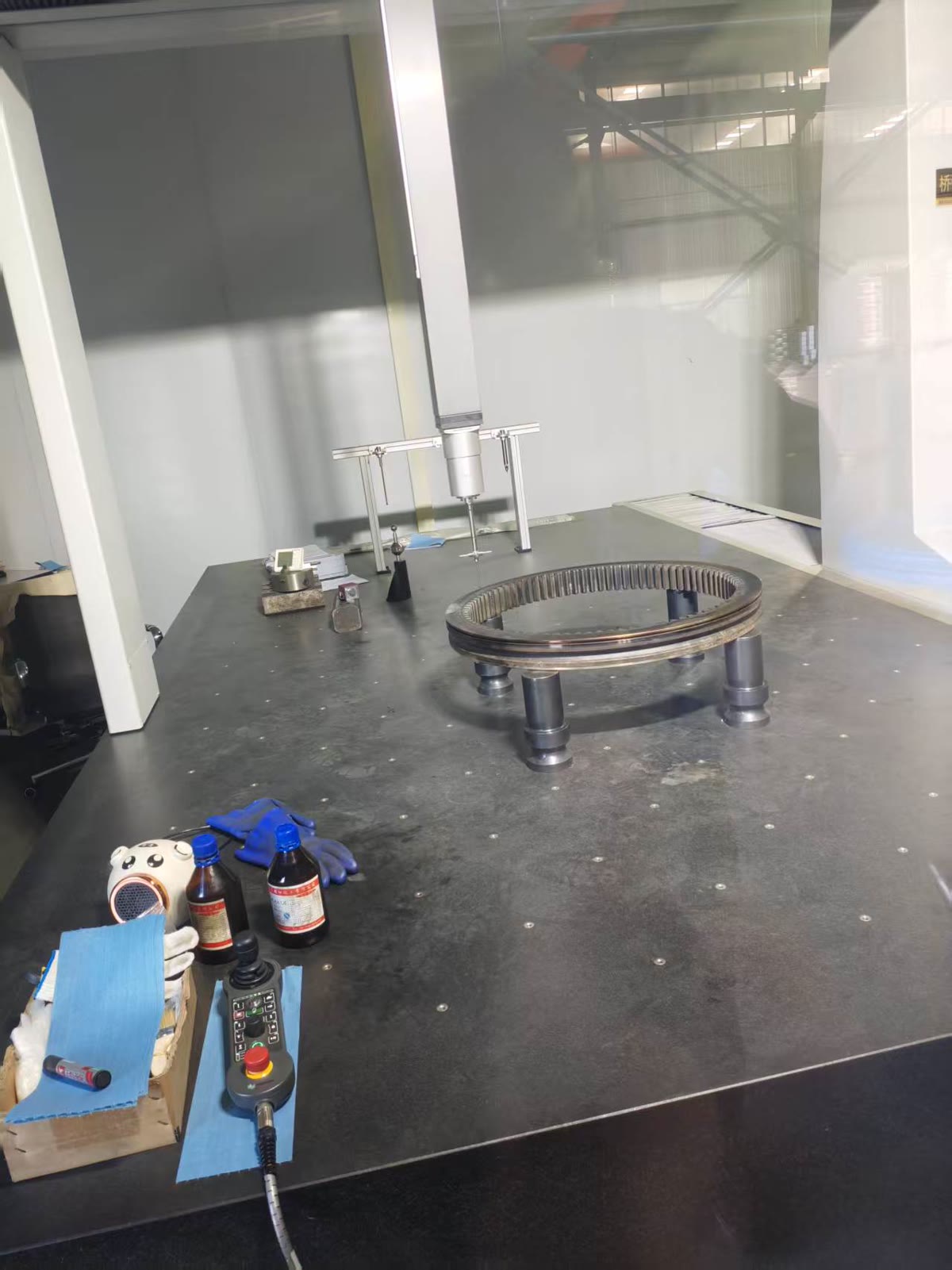
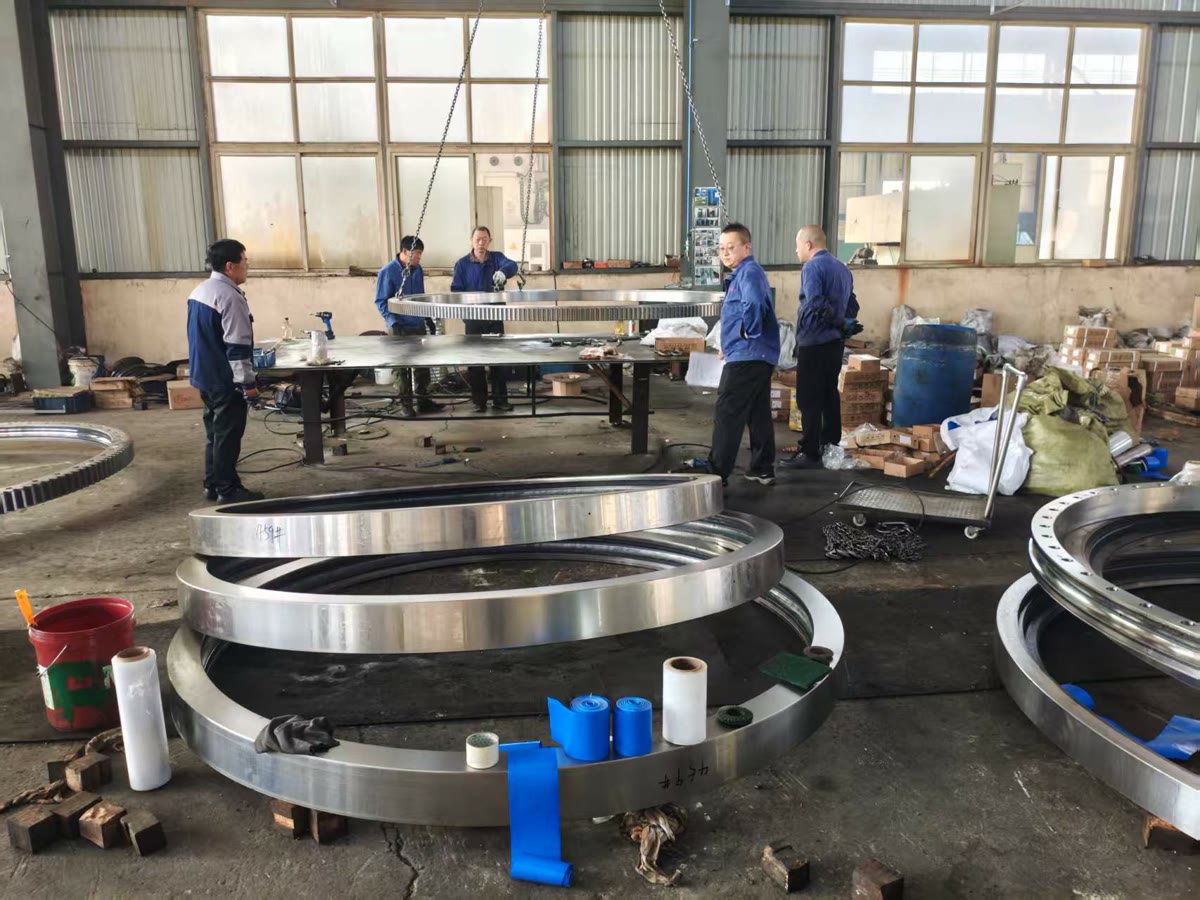
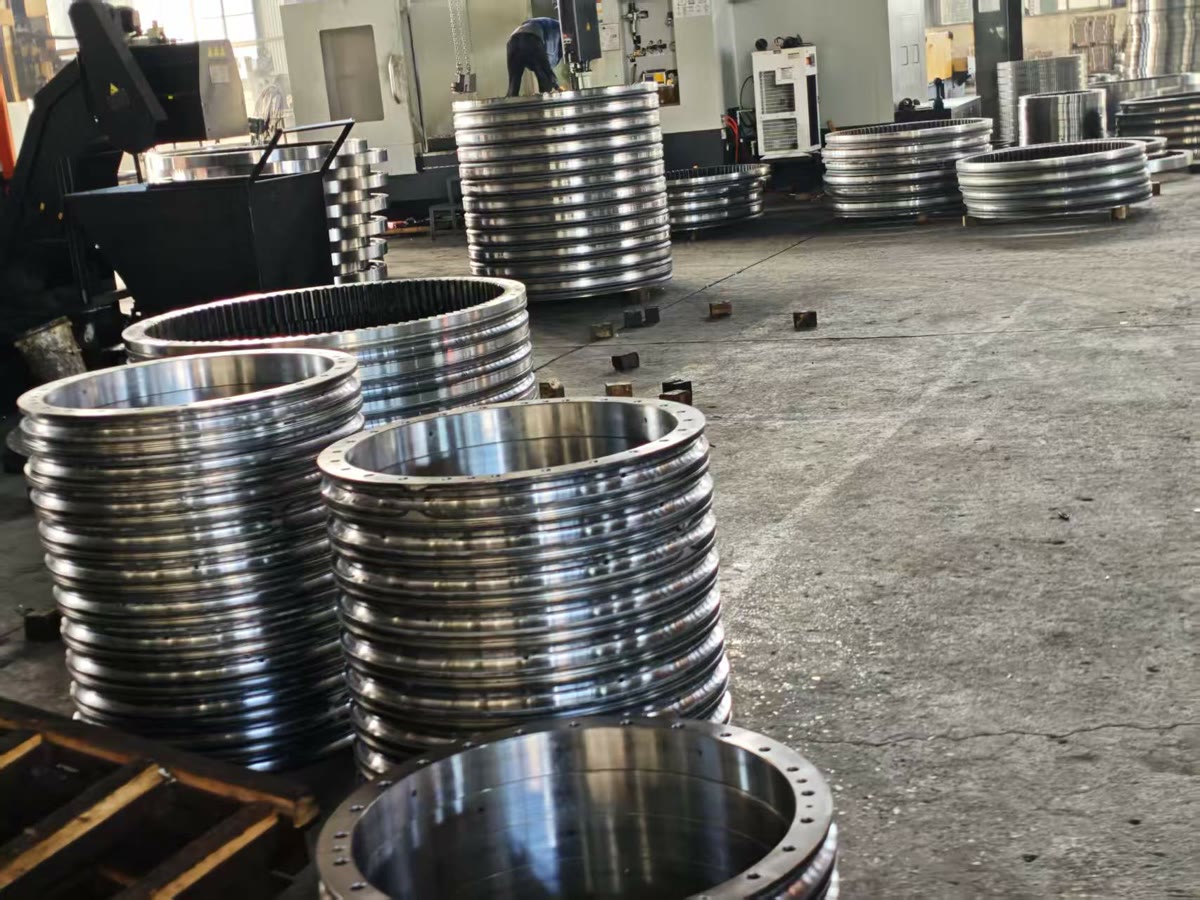
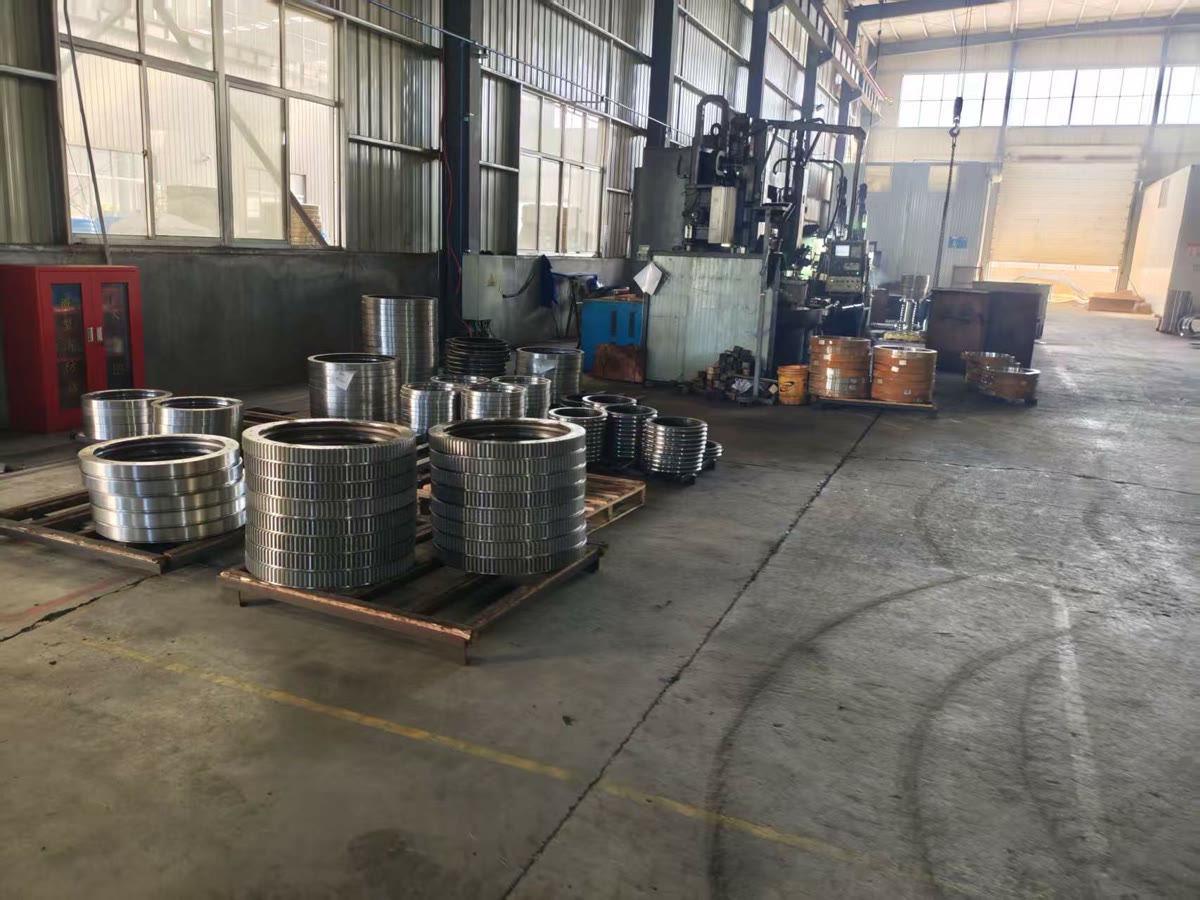
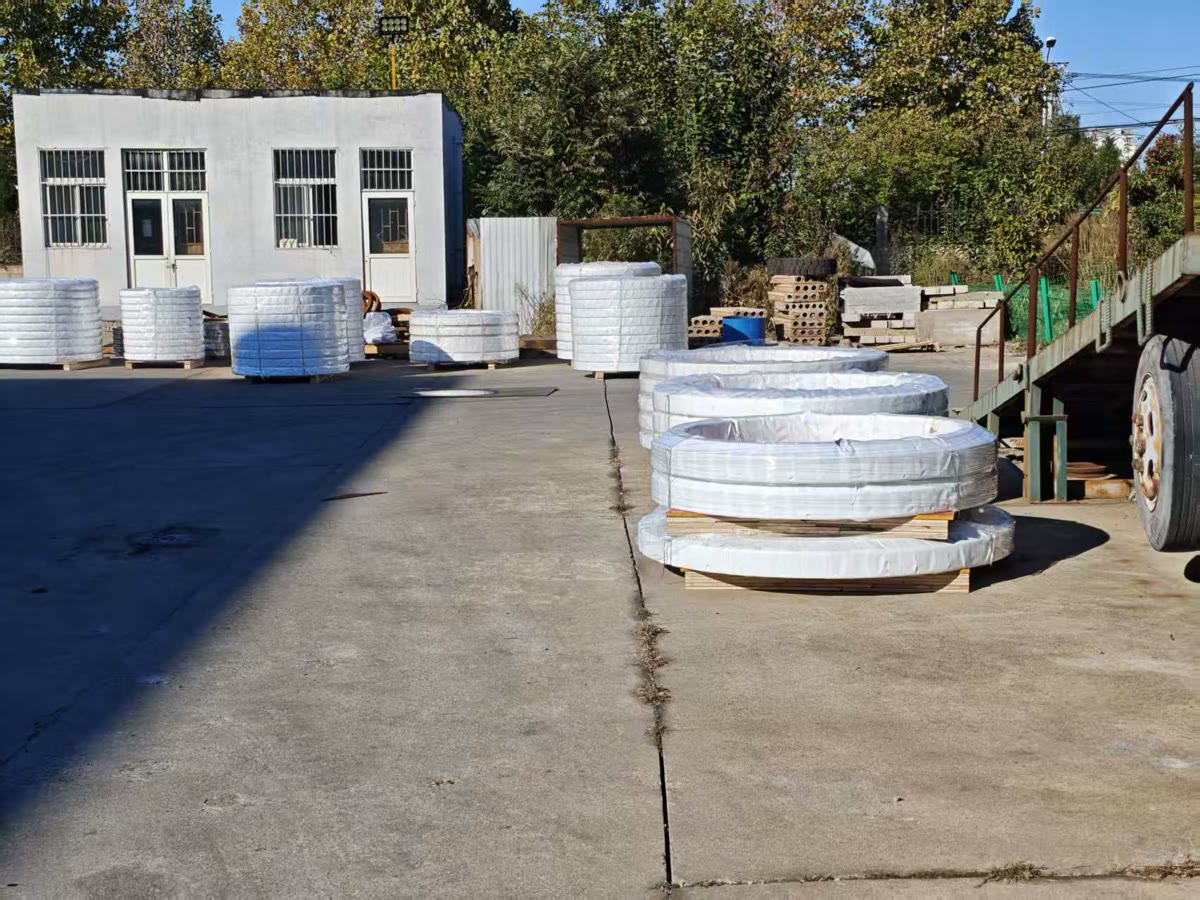
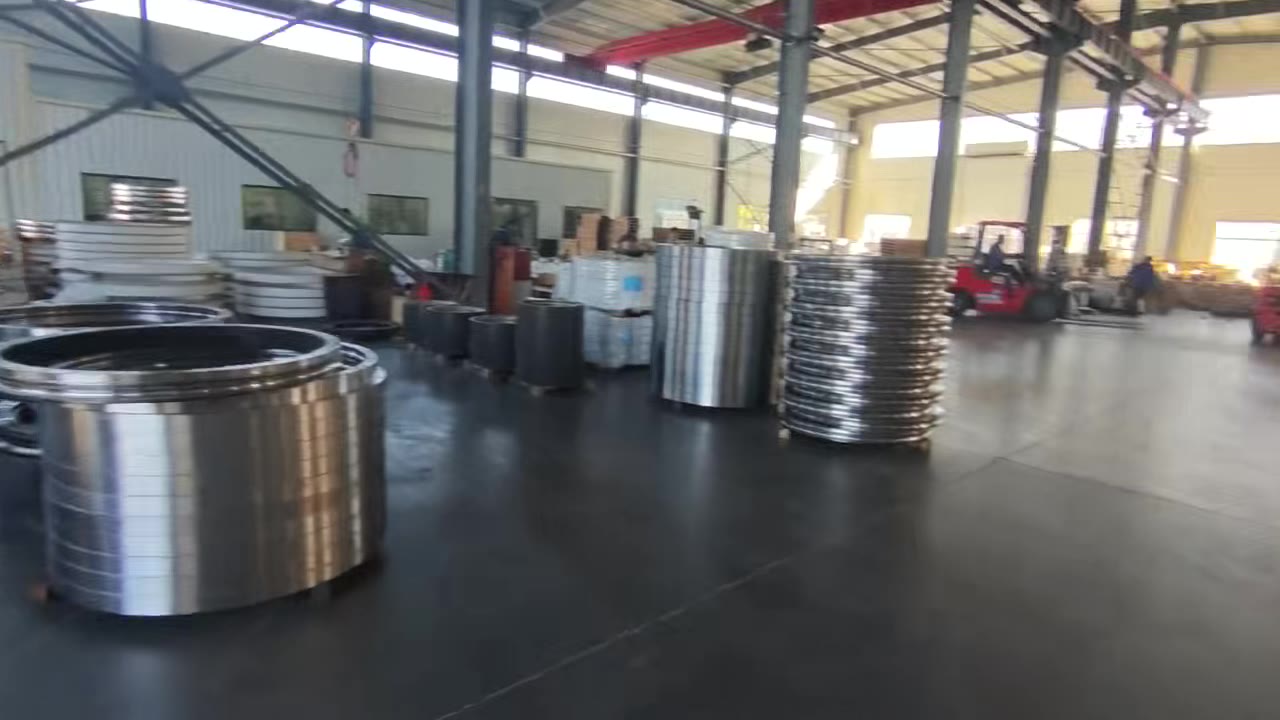
The photos and video below were taken during our factory audit at our ISO 9001:2015 certified partner plant in China. Every batch is dimension-checked before shipment and ships with a free 3.1 material certificate.
6. Choosing a slew bearing supplier
Slew ring failures are expensive - a seized yaw drive stops a wind turbine, a cracked ring grounds an excavator. What separates a reliable supplier from a cheap one:
- Certification: ISO 9001:2015 (not just claimed - ask for the certificate number and expiry).
- Material traceability: 3.1 certificates with heat numbers; 42CrMo / 50Mn or GCr15 depending on design.
- Heat treatment control: raceway hardness and hardened depth are where cheap rings fail first.
- Inspection: CMM on raceways and bolt holes, plus a written dimensional report per batch.
- Engineering support: can they check your load calculation and mounting design before quoting?
- Lead time honesty: standard sizes 15-25 days; large three-row rollers 30-45 days. Anyone promising a week for a 3-metre ring is guessing.
7. FAQ
What is a slew ring bearing used for?
It transmits radial, axial and moment loads while allowing slow, controlled rotation - the core rotating joint in excavators, cranes, tunnel boring machines, wind turbine yaw drives and slewing cranes.
What is the difference between a ball slew ring and a roller slew ring?
Ball slew rings suit moderate loads and higher speeds with lower friction. Three-row roller slew rings carry much higher moment and radial loads at lower speeds - the standard choice for heavy excavators and cranes.
How long does a slew ring bearing last?
With correct mounting, sealing, lubrication and load within rating, industrial slew rings typically run 8-15 years or 20,000-50,000 working hours. Early failure almost always traces to seal contamination, bolt preload loss or mounting face error.
Can I get a custom slew ring bearing made to my drawing?
Yes. ISO 9001:2015 certified plants routinely manufacture non-standard slew rings to drawing or sample, with gear options (external, internal or none) and custom bolt patterns. Send your drawing or mounting dimensions for a quote.
What certificates come with a slew ring bearing?
Standard shipments include a material certificate (3.1) and a dimensional inspection report. The manufacturing plant holds ISO 9001:2015 certification; mill certificates and third-party inspection are available on request.
Send your load case - get a sized proposal
One drawing or a set of mounting dimensions is enough. Our engineering team responds within one working day.